Search "best family ski resort Japan" from Australia and the results split into two camps: generic top-ten lists repeating the same photogenic mountains, and tour-operator blogs promoting their own package. Neither reflects how Japanese parents actually decide. The pattern is consistent: nobody starts with "which resort is best" — they start with "how old is our youngest child," and work outward from there.
That's a useful place to start, because the resorts that deliver best for young families aren't always the ones with the most English-language marketing — some of what follows will sound familiar from Niseko or Hakuba, some of it (like a resort giving primary-school kids a free lift ticket every day of the season) won't. My own first-hand experience in Japan's ski country is Hakuba specifically, where I lived and worked for two months one winter. Everything below about Nozawa Onsen, Rusutsu, Myoko Suginohara and Madarao is drawn from published resort information and how these places are reviewed by Japanese skiers, not personal experience — worth flagging before the specifics.
What Actually Makes a Resort "Family-Friendly" in Japan?
Japanese ski media and resorts themselves return to the same four questions when sizing up a family-friendly place — a more useful checklist than any star rating.
Which of these matters most depends on your youngest child's age. Families with a child still in nappies, or too young for a lesson, focus almost entirely on the first question — whether a resort has a licensed childcare centre, and from what age. Families with a four-to-seven-year-old trying skiing for the first time care most about the second — whether the lesson is actually taught in English, not just offered with an English-friendly welcome.
Once kids reach primary-school age, the third question dominates, since that's when total costs start climbing fastest. The fourth cuts across all of these and depends more on which part of a resort you book than its name — Nozawa Onsen, for instance, is a genuine old hot-spring town rather than a single purpose-built base, so how close your room sits to the lift depends on where in the village you stay.
Five Resorts Worth Knowing, Compared Honestly
Here's how five resorts that don't always make English-language "best of" lists compare on those four questions, based on what each publishes rather than marketing copy. Where a detail wasn't published clearly enough to state as fact, the table says so rather than guessing.
Figures are current as of July 2026, with a rough Australian-dollar conversion at about ¥97 to the dollar.
| Tsugaike & Goryu (Hakuba) | Nozawa Onsen | Rusutsu | Myoko Suginohara | Madarao (Tangram) | |
|---|---|---|---|---|---|
| Best for | Beginner-friendly slopes inside Hakuba Valley | An old hot-spring town with licensed childcare | 4–7 year-olds needing a first lesson in English | Primary-school families watching lift-ticket cost | Families wanting a booked English or Chinese lesson |
| Childcare (age range) | Not published | 1–6 yrs, from ¥2,000/hr (~AU$20) | 1 yr–preschool, ¥2,000/hr (~AU$20) | Not confirmed | Not confirmed |
| Kids' ski lessons in English | Not confirmed (Happo-one and Iwatake nearby do teach in English) | Independent operators only, not resort-run | Yes — Samurai Kids, international instructors + bilingual staff | Not confirmed | By reservation only, private lesson |
| Kids' lift ticket | Not published | Preschoolers free with an adult; free day 4x a season | Free age 3 and under; 4–12 yrs ¥8,000 (~AU$80) | Free every day, primary school and under | Not published separately from adult pricing |
| Adult 1-day lift (reference) | ¥8,200–9,500 (~AU$85–95) | Not published in the sources used here | ¥16,200 (~AU$165) | ¥8,000 (~AU$80) | Not published in the sources used here |
Tsugaike Kogen and Goryu (Hakuba Valley)
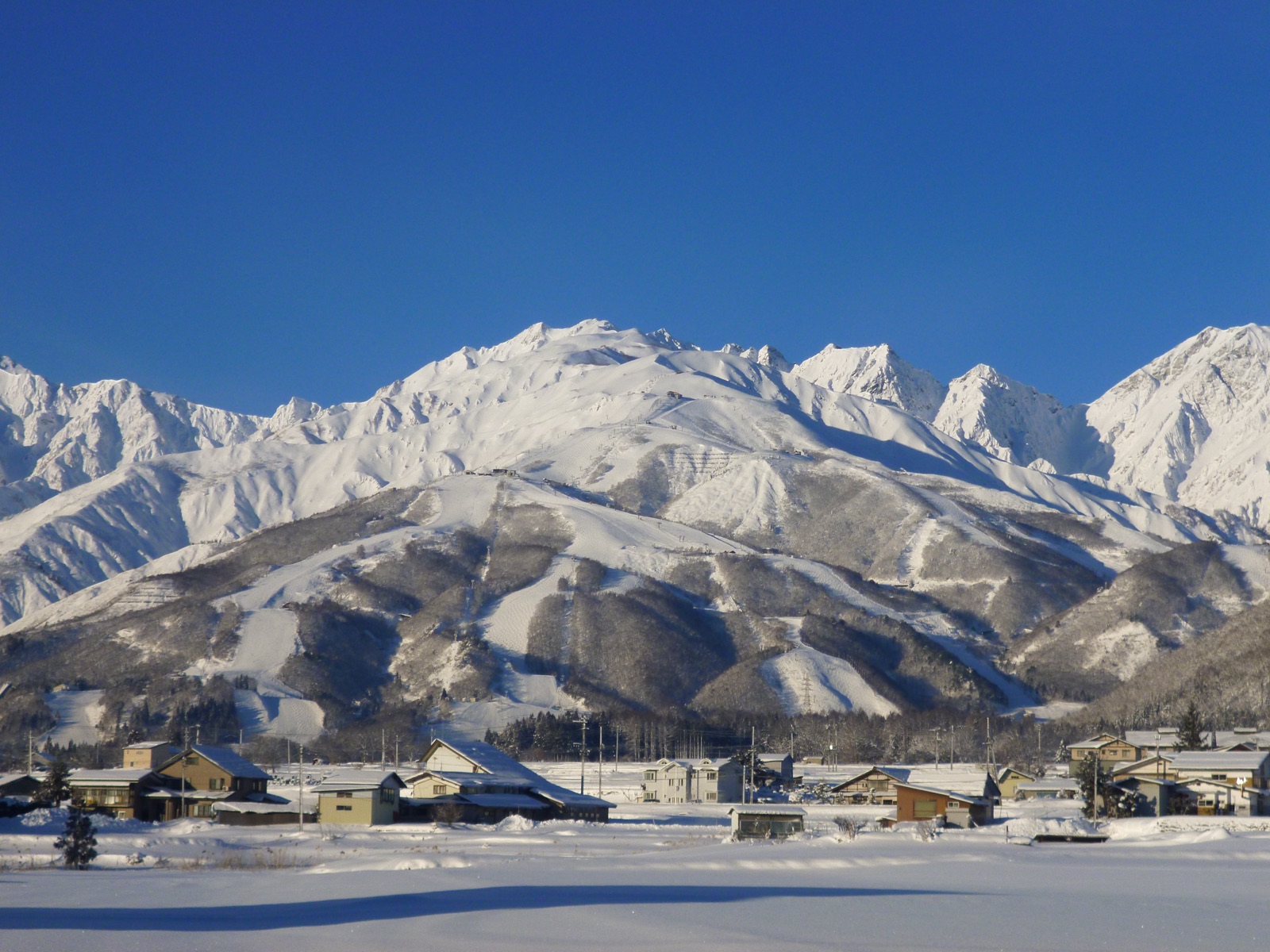
Tsugaike Kogen and Goryu aren't separate from the Niseko-or-Hakuba conversation — they're the two most family-oriented corners of Hakuba Valley, the ten-resort cluster most Australians already have half-booked. Tsugaike gets the heaviest snowfall in the valley, and its main slope is a gentle run 1,200 metres wide that stays open into early May most seasons; it also has its own 70-by-70-metre kids' park. Goryu, sold on a shared lift ticket with the steeper Hakuba47 next door, has its own Usagidaira Kids Park and easier, family-built terrain, while Hakuba47 gives an older sibling somewhere to push harder on the same pass. A single-day adult lift ticket runs ¥8,200 to ¥9,500 (about AU$85–95) at either, well under the valley's ¥10,400 (about AU$105) all-mountain pass.
What I can't confirm is an English-language kids' ski school at either — that's established only at Happo-one, elsewhere in the same valley, and at Iwatake. If a lesson taught in English matters more to your family than which exact Hakuba resort you're on, it's worth reading how Hakuba Valley's own bases actually differ before deciding where to stay.
Nozawa Onsen
Nozawa Onsen is a historic hot-spring village with a ski resort built in, rather than built from scratch — that history shows in how it treats young families. The ski resort runs a childcare centre, Yu-min, on the second floor of the Hikage Information Centre, taking children from age 1 to 6 with a qualified carer on-site; a full day runs ¥7,000 (about AU$70), a half day ¥4,000 (about AU$40), dropping to ¥5,000 (about AU$50) a day from your second consecutive visit, with a loyalty points system that converts into either a discount or a lift ticket.
Preschool-age children ski free alongside an adult on the standard lift ticket, and four Sundays in the 2025-26 season were designated "Ski Kids Day," when children up to junior-high age get a free lift ticket against a refundable ¥500 deposit.
Nozawa's site lists several English-oriented ski school operators, Canyons and Nozawa Holidays among them, but these are independent businesses rather than resort-run — the resort's advice is to check an instructor's armband before booking, since unlicensed operators turn up too.
Rusutsu
Rusutsu, in Hokkaido, is the one resort on this list with an officially confirmed, resort-run English-language kids' lesson. Samurai Kids takes children aged 4 to 7 (toilet-trained is a stated requirement) in groups capped at six per instructor, taught by "friendly international instructors," backed by Japanese-speaking bilingual staff for translation. A 2.5-hour lesson runs ¥17,000 (about AU$175); a 5-hour lesson with lunch included is ¥24,000 (about AU$245), with different pricing over New Year and the spring season. Beyond lessons, the Samurai Kids Park — moving walkways, sledding, tubing — runs ¥2,400 to ¥5,200 (about AU$25–55) depending on how many days you buy, and is free for children 2 and under.
Rusutsu Resort Nursery takes children from 1 year old to preschool age at ¥2,000 (about AU$20) an hour, with lunch and snacks charged separately. On the lift ticket, children 3 and under ski free and 4-to-12 year-olds pay ¥8,000 (about AU$80), against an adult day pass of ¥16,200 (about AU$165) — steeper than Hakuba's.
Myoko Suginohara
Myoko Suginohara, run by Prince Snow Resorts, has the most straightforward pitch to a cost-conscious family here: children in primary school or younger ski and ride free every day the resort is open, all season, with a season lift pass issued the first time you turn up. Adult pricing sits at ¥8,000 general or ¥7,200 for members (about AU$80 and AU$75), across the 2025-26 on-season (13 December to 29 March), with a free rental set thrown in for kids in that same age bracket on the third Sunday of each month.
What the official site doesn't confirm is a licensed childcare centre or an English-language kids' ski school — the same is true of nearby Akakura, whose site confirms a kids' park exists but doesn't spell out childcare or English-language details either. If lift-ticket cost is your family's biggest worry, this is hard to beat; if an English-taught lesson is non-negotiable, it isn't the resort to assume that on.
Madarao (Tangram Ski Circus)
Madarao Kogen's Tangram Ski Circus, between the Shiga Kogen and Myoko areas, is a smaller resort with a specific answer to the English-lesson question: book ahead. Its regular Kids course (ages 4 to 6, ski only) runs ¥9,000 half-day or ¥13,000 full-day (about AU$90 and AU$135); the Junior course, for primary and junior-high-age kids, runs ¥8,000 or ¥12,000 (about AU$80 and AU$120). Group lessons run in Japanese, but English and Chinese lessons are available as a reserved private lesson for up to four people, at ¥50,000 half-day or ¥90,000 full-day (about AU$500 and AU$900) — book ahead rather than turning up on the day.
Is English Really Only Available in Niseko and Hakuba?
It's a reasonable assumption from the outside, and only partly true. Rusutsu's Samurai Kids programme is a genuine, resort-run English-language kids' lesson, not a marketing line — the clearest counter-example here. Madarao's private English and Chinese lessons are another, even if they cost more and need booking ahead rather than turning up on the day.
Where the assumption holds more truth than families expect: Myoko Suginohara, Akakura, Tsugaike Kogen and Goryu don't have a confirmed English-language kids' ski school on their own sites, and Nozawa Onsen's English-oriented schools are run by independent local businesses rather than the resort itself — genuinely useful, but not the same guarantee as a resort-run programme, and worth confirming directly with the operator before you book.
One more wrinkle that trips up overseas parents: the age that counts as a "free" or discounted child in Japan isn't consistent from one resort to the next. Myoko Suginohara draws the line at primary-school age; Rusutsu draws it at 3 and under for a free lift, with a separate rate from 4 to 12; Nozawa's everyday policy is preschool-age children skiing free alongside an adult. Elsewhere in the region, Shiga Kogen — technically 18 linked ski areas rather than one resort — splits its kids' facilities by area rather than running one blanket policy, a useful reminder that "one resort" often isn't, even here. None of these age brackets line up, so check the actual definition at whichever resort you book rather than assume one resort's rule carries over to the next.
So Which One Actually Suits Your Family?
None of this adds up to one winner, and Japanese parents don't expect one. What it does give you is a shortcut based on your youngest child's age — the fastest way through this decision.
If you've still got a child too young for a lesson, Nozawa Onsen and Rusutsu are the two resorts here with an actual licensed childcare centre rather than just a kids' park — both from age 1, both charged by the hour. If your child is 4 to 7 and this is their first time on snow, and English-language lessons matter to your family, Rusutsu's Samurai Kids is the one confirmed option here; Madarao gets you there too, but only as a booked private lesson at a higher price. Once your kids are primary-school age and mainly worried about the lift-ticket bill stacking up over a week or two, Myoko Suginohara's free-every-day policy is the standout — worth weighing against Hakuba Valley's Tsugaike and Goryu if Hakuba's already pencilled into your trip.
Whichever of these you land on, Japan's popular ski areas — Hakuba's Australian visitor numbers peak hard in January — get booked earlier than the equivalent decision would at home. If your dates are locked in around December or January, work backwards from when accommodation opens for booking, which our guide on when to book a Japan ski trip walks through in more detail.
There's no single "best family ski resort in Japan" — there's the resort that matches how old your kids are right now, and that changes every season your family keeps skiing.