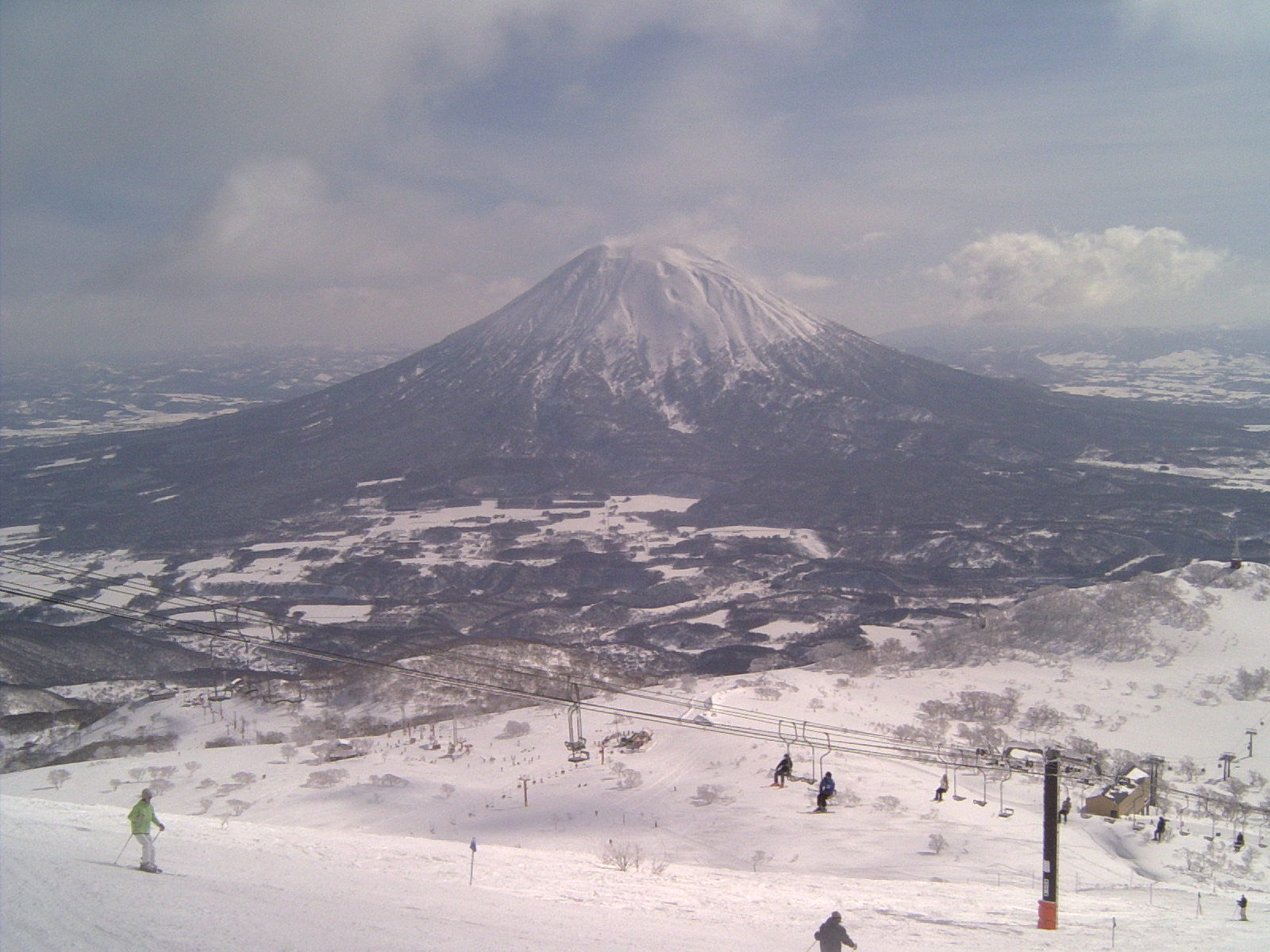
If you've searched "Niseko vs Hakuba," you've probably found a pile of English-language articles saying the same thing: Niseko is the powder mecca, Hakuba the cheaper backup for people who can't get to Niseko. That's not wrong, but it's not how Japanese skiers actually decide. I'm a Tokyo-based skier who once spent a winter — New Year's Eve included — living and working in Hakuba's Happo village, so here's how Japanese skiers in general weigh it up, sources included.
Ask a Japanese skier which one is "better" and you'll usually get a shrug: what are you actually trying to do? Niseko and Hakuba aren't rivals for the same title — they're different tools for different jobs, and the choice comes down to snow, cost, access and how comfortable you are with a resort town that no longer feels especially Japanese.
Are Niseko and Hakuba Even Playing the Same Game?
Not really. Niseko United is four linked ski areas — Grand Hirafu, Niseko Village, Annupuri and HANAZONO — on the western side of Hokkaido, built around famously dry, cold powder snow. Hakuba Valley is a much bigger patchwork: ten separate resorts spread across Hakuba, Otari and Omachi villages in Nagano, connected by a shared lift pass and a shuttle bus network rather than a single unified base area.
That structural difference matters: Hakuba's ten resorts mean you can match the mountain to the day — gentle slopes for a first-timer in the morning, something steeper for an experienced skier in the afternoon, without leaving the valley. Niseko's four areas are more uniform in character, which is part of why its reputation rests so heavily on the snow itself rather than the terrain.
How Do Japanese Skiers Actually Decide Between Them?
In practice, the decision usually comes down to four questions, roughly in this order of importance:
How much travel hassle are you willing to take on?
Hakuba is a same-day trip from Tokyo; Niseko, realistically, isn't. Japanese families and weekend travellers, often working with limited time off, tend to default to Hakuba simply because the trip itself is easier.
How much do you want to spend?
Lift tickets and accommodation both run higher in Niseko, and Japanese skiers talk about this openly — "easy to get to and good value" is a common way Hakuba gets described in comparison.
Is the snow itself the whole point of the trip?
If you're chasing the driest, lightest powder you can find, and travel time and cost are secondary, Niseko generally wins that argument. Skiers who've tracked both resorts for years still give Hokkaido's snow the edge over Hakuba's.
Do you want a course-heavy mountain or a genuinely Japanese atmosphere?
Hakuba, and Happo-one in particular, has a reputation as a serious training ground for skiers who want to work on technique, with a stronger sense of being a Japanese ski town. Niseko's international character is now a defining feature of the place, for better or worse depending on what you're after.
How Much More Does Niseko Actually Cost?
The price gap between Niseko and Hakuba is real, and it's grown over the past few years as Niseko's foreign investment has accelerated.
Comparing the same type of pass at each resort keeps this an apples-to-apples comparison, not a cherry-picked one.
| Niseko | Hakuba | |
|---|---|---|
| All-mountain 1-day pass | ¥12,000 | ¥10,400 |
| Single-resort 1-day pass (peak) | ¥11,000 (Grand Hirafu) | ¥8,700 (Happo-one) |
| Cheapest single-resort pass | ¥7,000 (Annupuri) | ¥8,200 (Tsugaike) |
| Nationwide context | One of only 4 resorts in Japan over ¥10,000/day | The other one of those 4 resorts |
Across roughly 64 major Japanese ski resorts surveyed nationally, the average day-pass price is about ¥7,327 — only four resorts nationwide charge more than ¥10,000 for a single day, and three of those four are Niseko-related; Hakuba Valley's all-mountain pass is the fourth. Both places are expensive by Japanese standards — Niseko is simply a notch more expensive again.
Accommodation is where the real gap opens up. Niseko's condos and resort hotels commonly run from around ¥15,000 to ¥80,000 a night, and its most exclusive foreign-branded properties have listed rooms in the hundreds of thousands of yen a night — a price point that doesn't exist in Hakuba. Hakuba's major hotels sit at a noticeably lower tier for comparable quality, though its own prices are climbing too.
Which One Is Actually Easier to Get To?
This is the single biggest practical difference between the two.
Getting to Hakuba
The fastest option is the Hokuriku Shinkansen from Tokyo to Nagano (around 80–100 minutes, roughly ¥8,340 for a reserved seat), followed by a connecting bus into the Hakuba area (60–90 minutes, about ¥2,000–2,200). All up, budget around three to three-and-a-half hours door to door. If you'd rather skip the transfer, the limited express Azusa runs direct from Shinjuku to the Hakuba area in around four hours with no changes. There's also a highway bus from Shinjuku, from about ¥5,200, taking just under seven hours — a genuinely budget option if you're not in a hurry.
Getting to Niseko
There's no bullet train option here — Kutchan, the gateway to the Niseko area, isn't on the shinkansen network. You fly into New Chitose Airport, then take a further bus or car transfer of around two hours to reach the resort villages. Combined with flight time and airport transfers on both ends, this genuinely functions as a full day of travel rather than a half-day hop.
If you're juggling train timetables and bus transfers on the day, having working data on your phone before you land makes the logistics far less stressful — my guide to the best eSIM for Japan covers what actually works well in rural Nagano and Hokkaido, not just central Tokyo.
Is Niseko's Powder Really Better?
For raw snow quality, most people who've skied both — Japanese skiers especially — give the edge to Niseko. Hokkaido's interior gets bitterly cold in winter, down toward minus 20 degrees at times, and the region sees more than 15 metres of snowfall a year. The result is the "silky powder" Niseko is famous for: very low moisture content, so it falls apart almost weightlessly rather than clumping.
Hakuba's higher-elevation slopes also get good, fluffy powder, and because the area sits closer to the Pacific side of the country, it tends to see more clear, sunny days than Niseko does in the depths of winter. One Japanese skier who has directly compared Niseko and Happo-one over roughly fifteen years put it simply: the snow itself goes to Hokkaido, but the terrain and course character go to Happo-one.
Happo-one is Japan's spiritual home of competitive skiing — it hosted the 1998 Nagano Winter Olympics — and it's built around named, storied courses across 220 hectares, a 1,071-metre vertical drop and an 8,000-metre longest run. Niseko United, by comparison, is a bigger combined area but with less individual course character; it's the snow, not the runs, that people go there to talk about.
What Do Japanese Locals Really Think About Niseko Right Now?
Niseko has changed enormously, and Japanese locals notice — this is the part most tourist-facing comparison articles skip entirely.
Kutchan town's population is around 4,300 people, of whom roughly 17% are registered foreign residents. Foreign overnight stays hit an all-time high of 738,800 in the 2023 fiscal year, the most since records began in 2006.
The resulting labour shortage has pushed local wages past ¥2,000 an hour — higher than in central Tokyo — and some aged-care facilities have reportedly had to close simply because they can't staff them. Some luxury condo marketing material is printed only in English and Chinese, with no Japanese version at all, and a large majority of high-end property in the area is reported to be foreign-owned. Local news coverage has used the phrase "this isn't a Japanese town anymore" — not as an insult, but as a genuinely felt description from residents.
None of this makes Niseko a bad choice. If deep, reliable powder and an international resort-town atmosphere are what you're after, Niseko delivers on exactly what it promises, and plenty of skiers — Japanese and foreign alike — think the trade-off is entirely worth it. The point isn't that Niseko is worse; it's that "authentic small Japanese ski town" no longer describes it, and going in with that expectation is where visitors end up disappointed.
Hakuba is watching this closely and has explicitly said it isn't chasing Niseko's growth model, aiming instead for locally-led development rather than the foreign-capital-driven approach that's reshaped Kutchan. The gap with Niseko is real today, but it's narrowing.
Heads upIf you've never skied in Japan before, don't take Happo-one's posted difficulty grading entirely at face value — locals rate it about one notch harder than the label suggests. First-timers after an easy warm-up day are often better off starting at Tsugaike or Goryu before working up to Happo-one later in the trip.
So, Which One Should Your Family Actually Pick?
Here's roughly how a Japanese travel-planning parent would run the numbers for a few common group types.
This isn't a universal ranking — it's what tends to matter most for each kind of group.
| Better fit | Why | |
|---|---|---|
| Toddlers or pre-schoolers (under 6) | Hakuba | Shorter, simpler transfer from Tokyo, and several resorts in the valley (Tsugaike, Goryu) are built around gentle slopes and dedicated kids' snow parks rather than one demanding mountain. |
| Primary-school-age kids (7–12) | Either, depending on priority | Choose Hakuba if easy access and budget matter more; choose Niseko if guaranteed deep powder is the priority and a longer travel day is acceptable. |
| Teens or couples, first Japan ski trip | Hakuba | A simpler first trip logistically, with a wider spread of ability levels available across the ten resorts in one valley. |
| Committed powder hunters, repeat visitors | Niseko | The snow is the reason to go, and at that point the extra cost and travel time stop being the deciding factor. |
If you're leaning toward Hakuba with kids in tow, it's also worth thinking about which of the valley's areas you actually want to be based in — Happo has the transport hub and the onsen, while Echoland and Misorano are where most of the restaurants and cafés cluster. My guide to where to stay in Hakuba with kids goes through that area-by-area trade-off in more detail.
- AvoidAssuming 'Niseko' is a single ski resort
It's actually four linked areas — Grand Hirafu, Niseko Village, Annupuri and HANAZONO — under one shared lift pass, similar in structure to how Hakuba Valley links its ten resorts.
- AvoidPlanning a shinkansen route into Niseko
There isn't one. Kutchan has no bullet train station, so you're flying into New Chitose and then taking a roughly two-hour bus or car transfer — a big part of why the trip eats up most of a day.
- AvoidAssuming Hakuba is still the 'cheap, sleepy' option
Commercial land prices in Hakuba village rose around 30% in a single year in 2024, and land near the bus terminal has more than tripled since 2018. The cost gap with Niseko is real, but it's closing.
- AvoidBooking without checking which resorts your accommodation actually reaches
Hakuba Valley's all-mountain pass covers lift access across all ten resorts, but you'll still want to confirm which ones your hotel's shuttle bus actually serves before you assume you can hop freely between them.
The Honest Version
Neither resort is "the answer." Niseko earns its reputation on snow quality alone, and if that's genuinely what your trip is about, it delivers — just go in understanding you're visiting an increasingly international resort town, not a quiet Hokkaido village. Hakuba is the easier, cheaper, more varied choice for most first-time visitors and families, with the trade-off that its single most famous run, Happo-one, plays a little harder than its scorecard admits. Japanese skiers have made peace with treating these as two different trips rather than one contest — it's worth doing the same before you book.