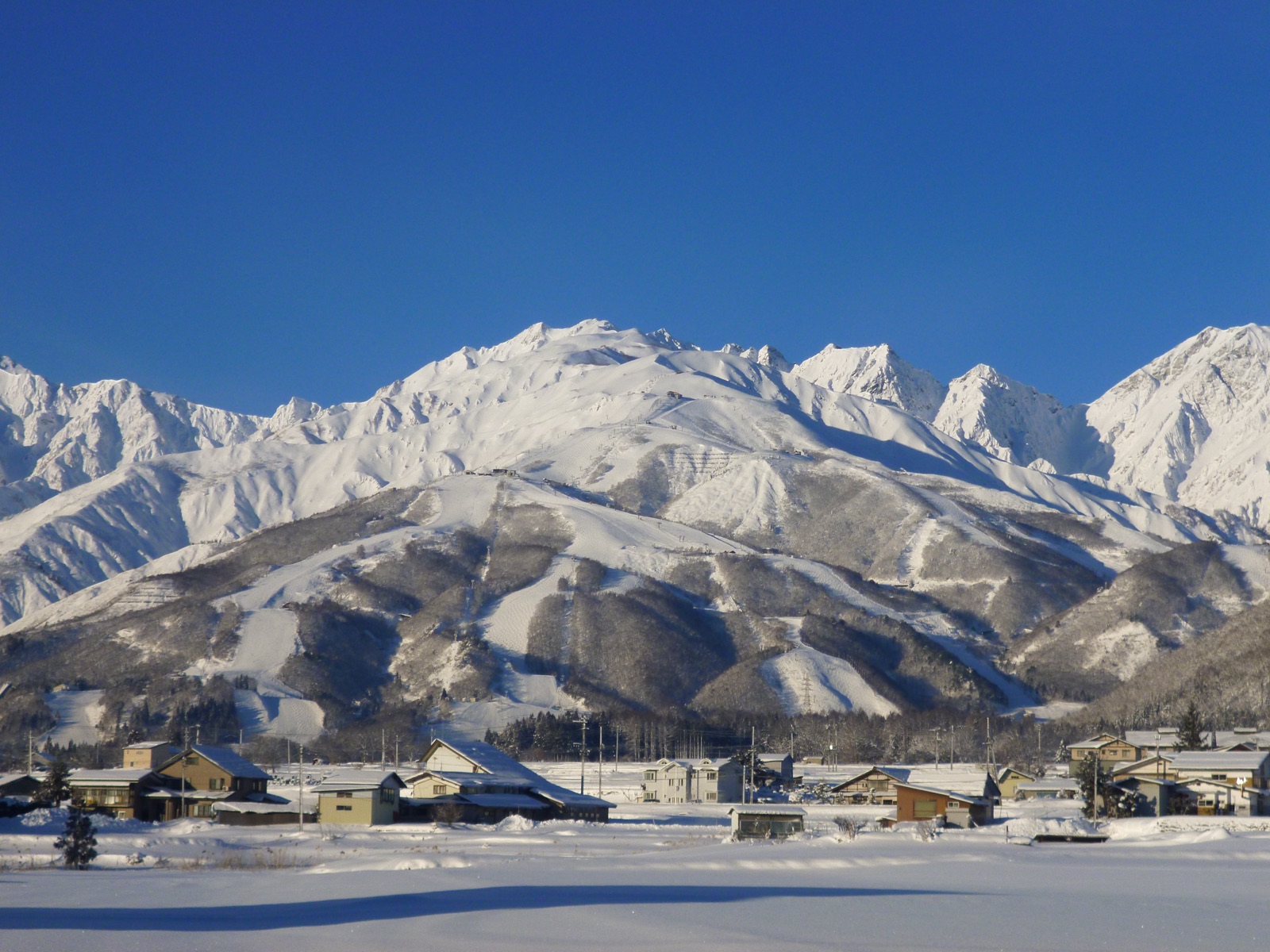
Search "skiing in Japan" from Australia and you'll be fed the same handful of names on repeat — Niseko, maybe Hakuba — because Niseko is the loudest name in English-language ski coverage. But it isn't actually where most Japanese skiers spend their season. A Japanese snow-sports data site, SnowNavi, published the real numbers in July 2025: a nationwide tally of visitor counts across Japan's ski resorts for the 2024-25 season, with resorts that share one lift pass counted as a single zone. It's about as close as this gets to an honest scoreboard of where Japanese skiers actually go, and it looks nothing like what English-language coverage would suggest.
I should be upfront about where I stand: I'm a Tokyo-based skier, and my own first-hand experience is Hakuba specifically — I spent two months living and working in Happo village one winter, New Year included. Everything below about Shiga Kogen, Nozawa, Naeba and the rest is drawn from the published data and how Japanese skiers generally talk about these places, not personal experience.
Japan's 10 Busiest Ski Resorts, 2024-25 Season
Here's the actual ranking, by total visits over the season, resorts that share a common lift pass counted once.
| Rank | Resort | Prefecture | 2024-25 total visits |
|---|---|---|---|
| 1 | Shiga Kogen | Nagano | 1,046,000 |
| 2 | Yuzawa Snow Link | Niigata | 666,450 |
| 3 | Mt. Naeba | Niigata | 569,410 |
| 4 | Hakuba Goryu & Hakuba47 | Nagano | 510,238 |
| 5 | Takasu & Dynaland | Gifu | 499,089 |
| 6 | Joetsu Kokusai | Niigata | 446,000 |
| 7 | Hakuba Happo-one | Nagano | 409,534 |
| 8 | Nozawa Onsen | Nagano | 405,294 |
| 9 | Tsugaike Kogen | Nagano | 368,000 |
| 10 | Zao Onsen | Yamagata | 303,000 (estimate) |
A quick read on what each of these places is actually known for, mostly things Japanese skiers already take for granted:
Shiga Kogen isn't one resort so much as a federation of linked ski areas sharing a single lift pass — widely regarded as the biggest ski complex in the country, and likely why it tops this list by a wide margin.
Yuzawa Snow Link and Mt. Naeba, both in Niigata, share an obvious advantage: Echigo-Yuzawa station sits directly on the Joetsu Shinkansen line, comfortably within day-trip range of Tokyo. Naeba in particular has been marketed for decades as a big, reliable family resort, the kind of place a Tokyo family books without much agonising.
Takasu & Dynaland, in Gifu, pull their crowd from a different direction — an easy run from Nagoya rather than Tokyo, a reminder that "busy" in Japanese skiing doesn't only mean crowded with people from the capital.
Joetsu Kokusai rounds out the Niigata cluster that, between it, Yuzawa and Naeba, claims three of the ten spots on this entire list.
Nozawa Onsen is one of the country's older ski villages, built around an actual working hot-spring town rather than a resort base constructed for the purpose.
Zao Onsen, in Yamagata, is best known outside Japan for its frost-covered "snow monster" trees — one of the few resorts here that already has a foreign following, just not particularly from Australia.
The Hakuba Valley Puts Three Resorts in the Top 10
The detail that matters most if you're an Australian planning a trip: three separate, separately-ticketed zones inside the Hakuba Valley — Goryu & Hakuba47 at #4, Happo-one at #7, and Tsugaike Kogen at #9 — each independently made this national top ten. These aren't one valley counted once and inflating a single entry; they're typically sold as separate day passes, and each pulled enough visitors on its own to outrank most resorts in the country.
The Hakuba that most Australians already have pencilled in — usually mentioned in the same breath as Niseko — is the same valley a huge number of Japanese skiers default to as well. If Hakuba is already your plan, you're not settling for "the accessible alternative to the real thing." You landed on it for largely the same reasons Japanese families do: it's a same-day trip from Tokyo, its lift prices sit well under Niseko's, and its ten linked resorts cover everything from Goryu's gentle beginner slopes to Happo-one's Olympic pedigree.
Where's Niseko On This List? Nowhere — And Here's Why That's Not the Whole Story
If you've read this far waiting for Niseko to show up, it won't. Niseko United's operators — Grand Hirafu, Niseko Village, Annupuri and HANAZONO — along with Rusutsu and Sapporo Teine, haven't published total-visit figures directly comparable to the ones SnowNavi collected for this ranking, so there was simply nothing to include.
Undisclosed isn't the same as unpopular — this isn't proof that Niseko is quiet, or evidence it sits outside Japan's genuinely most-visited resorts. A good chunk of its real boom shows up in separate figures entirely, overnight-stay statistics for the wider Niseko area rather than resort-gate visitor counts, so its absence from this particular ranking isn't a verdict on how many people actually ski there.
My own take — and this is opinion, not a ranking claim: I don't book Niseko, for two reasons drawn from the actual numbers rather than a vibe. On a like-for-like all-mountain day pass, Niseko runs about ¥12,000 against Hakuba's ¥10,400, and the accommodation gap is bigger again — Niseko's top-end condos and hotels sit in a different price bracket entirely from anything comparable in Hakuba.
Kutchan, the town Niseko sits in, has also changed fast: something like one in six registered residents is now a foreign national, foreign overnight stays hit a record high in the 2023 fiscal year, and the resulting labour shortage has pushed local wages above what you'd earn in central Tokyo. None of that is a criticism of Niseko as a ski destination — it's just not the trip I personally want to plan and pay for.
If deep, reliable, world-class powder is the entire point of your holiday, and neither the cost nor a different kind of crowd — international rather than Japanese — bothers you, Niseko earns its reputation honestly, and book it without a second thought. That's a real, defensible choice. It's just not mine.
How Should Australians Actually Use This List?
For most Australian families, none of this changes what you should book first: Hakuba Valley is still the easiest, best-value base for a first Japan ski trip, for the same reasons it already wins the Niseko-or-Hakuba argument on its own merits — a same-day trip from Tokyo, and enough resorts within one valley to match almost any group's spread of ability levels. If you're travelling with kids, the more useful question usually isn't "Hakuba or Niseko" at all — it's which of Hakuba's own areas to actually base yourselves in, since the valley's ten resorts and villages suit very different kinds of trips.
Where this ranking earns its keep is for a longer holiday built around the December-January school break, when most Australian families are actually on snow in Japan. If two weeks is on the table — and for Australian visitors, it usually is — a Hakuba base with a side trip to Shiga Kogen (for sheer scale) or Nozawa Onsen (for an old-fashioned onsen town) makes for a genuinely different, less internationalised trip than doubling down on Niseko a second time. We haven't mapped out the logistics for those side trips yet, but they're worth keeping on your radar as Japan's actual most-visited resorts, not just its most photographed ones.
The Honest Version
Treat this ranking for what it is: a genuine, if incomplete, scoreboard. It confirms something Hakuba-bound Australians can feel reassured about — you're already choosing where a huge share of Japanese skiers choose too — while being honest that Niseko's absence is a gap in the data, not a verdict on its popularity. Shiga Kogen, not Niseko, has the strongest claim to being Japan's actual busiest resort, at least among the places willing to say so. Where you land on Niseko versus everything else probably comes down to the same question it does for Japanese skiers: is the powder the whole point, or is the trip about something more?